Getting gigs as a guitarist in 2026 comes down to three things: visibility, relationships, and relentless follow-through. Whether you’ve never played a paid gig or you’re trying to perform more consistently, these 27 proven strategies give you a concrete, actionable roadmap to fill your calendar — and most of them cost nothing but time and effort.
Key Takeaways
- Networking with local venues, event planners, and fellow musicians drives more consistent bookings than any single strategy on its own.
- Online platforms — from YouTube to dedicated gig booking sites — now account for a growing share of how independent guitarists land work in 2026.
- A polished electronic press kit (EPK) dramatically improves your success rate when pitching venues cold.
- Combining a strong online presence with regular live exposure at open mics and community events builds the kind of credibility that fast-tracks a gigging career.
Why Is Getting Gigs as a Guitarist So Hard in 2026?
Here’s the uncomfortable truth: there are more guitarists competing for the same stages than at any point in history. The global live music industry is genuinely booming — analysts project the market will surpass $40 billion by 2027 — but that growth doesn’t automatically reach independent performers. Venues have more options than ever, and booking decisions come down to who you know, how professional your pitch looks, and whether you show up consistently over time.
The other challenge? Most guitarists are exceptional at playing but far less experienced at self-promotion. Many assume talent alone will get them discovered. It rarely does. Research consistently shows that over 70% of working musicians attribute their regular gigs to personal networking rather than cold applications. That’s a striking finding: the guitarist who hustles off stage often out-books the one who only shines on it.
The good news is that the strategies below cover every angle — digital, live, relational, and tactical. Work through them systematically and you’ll start stacking opportunities rather than chasing them one at a time. Let’s get into it.
How Do You Network Your Way to More Guitar Gigs? (Tips 1–4)
Networking is the single most reliable driver of consistent bookings for working guitarists. The key is to approach it as a long game built on genuine relationships — not a sales pitch dressed up as small talk.
Tip 1: Network with Local Music Industry Professionals
Local promoters, venue owners, and fellow working musicians are your most direct pathway to paid gigs. The approach that works isn’t to pitch yourself at every interaction — it’s to build genuine, mutually beneficial relationships with people who can open doors for you over time. Show up at events, introduce yourself warmly, remember names, and follow up. Offer your help before you ask for anything in return. The guitarist who is known and genuinely liked in the local scene will always out-book the stranger who sends a cold email.
Have a concise elevator pitch ready — a 30-second summary of who you are, your style, and what makes your playing distinctive. When someone asks what you do, answer with confidence and clarity. That professionalism sticks in people’s minds long after the conversation ends. Consider also finding a mentor who is already active in your local scene. A good mentor introduces you to their professional network and helps you avoid the common mistakes that cost newer guitarists years of unnecessary struggle.
Successful networking begins by offering value to others before you ask for anything in return. The relationship comes first; the gig follows.
Tip 2: Join Music Industry Associations
Music industry associations connect you with promoters, record labels, event planners, and fellow musicians through regular events, workshops, and member job boards. Membership also adds a meaningful legitimacy boost when you’re applying for gigs or seeking representation. Local associations are particularly valuable for emerging guitarists because they focus on grassroots, accessible opportunities rather than stadium-level bookings. Joining one gives you a community, a resource hub, and a credibility signal — all for a modest annual fee.
Tip 3: Connect with Music Producers
Producers are talent connectors as much as they are sound shapers. A producer who believes in your playing doesn’t just improve your recordings — they actively refer you to artists, bands, and session work you’d never find on your own. Approach producers respectfully, come prepared with polished material, and demonstrate that you’re a pleasure to collaborate with. One strong producer relationship can unlock a cascade of gigs and session opportunities over the course of a career. This is one of the most underused routes to consistent paid work for guitarists at every level.
Tip 4: Attend Music Festivals and Conferences
Industry conferences and music festivals pack more booking agents, promoters, and talent scouts into one place than almost any other environment. These events are working opportunities for serious musicians, not just entertainment. Attend panels, introduce yourself to speakers, and carry your press kit at all times. Many of the most significant bookings in the independent music world trace directly back to a single conversation at a conference or festival. Visibility at the right events can set your career trajectory for months — and the connections made there often outlast the event itself by years.
Which Online Platforms Should Every Guitarist Be Using? (Tips 5–9)
Your online presence is now your first impression with most potential bookers. Get it right, and opportunities start to come to you rather than the other way around.
Tip 5: Build a Strong Social Media Presence
Instagram, TikTok, Facebook, and YouTube are where event organizers, venue managers, and fans discover new guitarists in 2026. You don’t need millions of followers — you need an engaged audience that genuinely reflects your musical identity. Post performance videos, behind-the-scenes moments, and short clips of you playing. Interact with comments regularly and use relevant hashtags to expand your reach. Industry data suggests that musicians who post short-form video at least three times a week see meaningfully higher inquiry rates from potential bookers than those who post sporadically.
Authenticity consistently outperforms production polish at this stage. A raw, honest clip of a killer guitar passage recorded in your living room will outperform a stiff, staged “official” video in terms of genuine connection and shareability. Go for real over perfect — and if you want the technical foundation that makes those videos worth watching, this guide to strumming your way to guitar greatness is an excellent place to sharpen what you’re putting on screen.
Tip 6: Share Music Samples Strategically Online
Sharing high-quality samples across platforms acts as your ongoing calling card. Rather than flooding every channel with anything you’ve recorded, be selective. Pick three to five tracks that best represent your range and style. Quality beats quantity every single time — one great recording shared consistently across platforms reaches more of the right people than twenty mediocre clips ever will. Use the analytics tools built into each platform to understand who your audience is and when they’re most active, then schedule posts to land when your listeners are actually online.
Tip 7: Set Up a Bandcamp or SoundCloud Account
Bandcamp and SoundCloud are music-specific platforms built for artist discovery and community engagement. Bandcamp lets you sell your music directly to fans and provides robust analytics about who is listening where; SoundCloud’s playlist and repost system helps your tracks reach new ears organically. Both platforms are regularly used by promoters and venue bookers who want to research an act before making contact. A well-maintained profile on either — or ideally both — signals professionalism and gives potential bookers an easy, friction-free way to hear exactly what you do.
Tip 8: Register on Gig Booking Websites
Platforms like GigSalad and The Bash function as online marketplaces where event organizers actively search for musicians. Collectively, these platforms process hundreds of thousands of bookings every year. A strong profile — professional photo, compelling bio, sample videos, and verified client reviews — puts you directly in front of people who are already looking to hire. Some platforms charge a commission or subscription fee, but the targeted exposure they provide makes it a worthwhile investment for most working guitarists. Register on multiple sites to multiply your visibility.
Tip 9: Post Regular YouTube Covers or Original Songs
YouTube has over 2 billion logged-in monthly users, and guitar content consistently ranks among the platform’s most-searched music categories year after year. Posting weekly or bi-weekly videos — covers of recognisable songs, original compositions, or instructional content — builds a subscriber base that becomes a genuine career asset. Research indicates that musicians who post to YouTube weekly grow their subscriber count roughly four times faster than those who post monthly. Use your video descriptions to promote upcoming gigs, link to your booking contact, and direct viewers to your other platforms. Covers in particular are powerful discovery tools: when someone searches for their favourite song and finds your unique take on it, they become your new fan.
How Can Live Performances Help You Land More Gigs? (Tips 10–13)
No online strategy fully replaces the impact of actually playing in front of people. Here’s how to leverage live performance to build a reputation that makes bookers come to you.
Tip 10: Perform at Open Mic Nights
Open mic nights are one of the most underrated tools in any guitarist’s gig-hunting arsenal. They’re low-pressure environments that attract local music fans and industry figures alike, and they give you stage time that practice sessions at home simply cannot replicate. Treat every open mic like a real gig — prepare your set thoroughly, bring your best gear, arrive early, and stay afterwards to connect with other performers and venue staff. Venue managers notice who shows up consistently and who delivers reliable, crowd-pleasing performances. That attention translates into paid opportunities.
Building a varied setlist is central to making open mics work for you. Starting with songs audiences already love creates instant connection before you roll out more personal material. If you’re looking for crowd-pleasing pieces that work brilliantly in live settings, mastering these simple guitar classics is an excellent foundation for any performing guitarist. Open mic regulars frequently report landing their first paid gig within three to six months of consistent attendance — so show up, play well, and stay visible.
Tip 11: Start Busking at Popular Spots
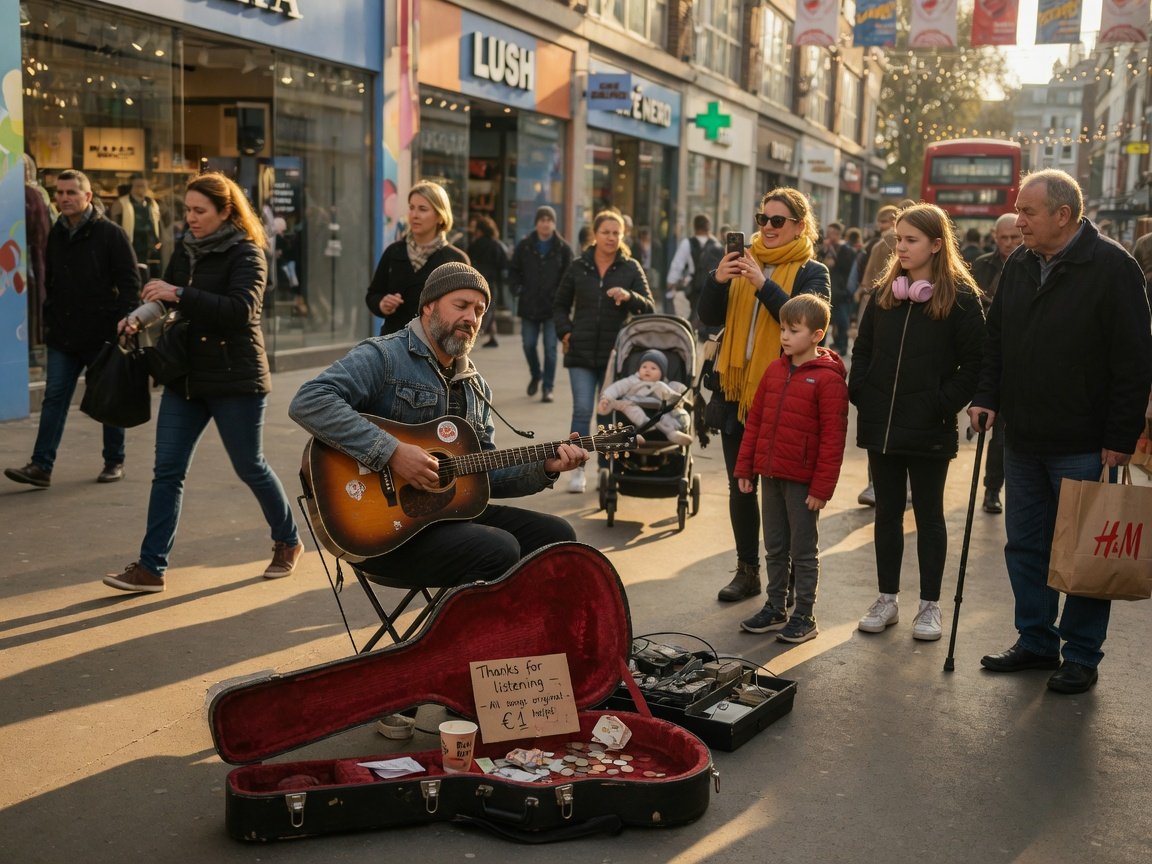
Busking is one of the most honest forms of performance feedback available to a guitarist. You play, people either stop or they don’t. High foot-traffic locations — busy pedestrian shopping streets, transport hubs, tourist attractions, and weekend markets — give you immediate audience data and a genuine chance to build a local following from scratch. Busking is also a genuinely no-cost promotional activity: it puts your music in front of people who had no plans to see live music that day. The confidence and adaptability you gain from playing to unpredictable public crowds makes every subsequent ticketed performance noticeably sharper.
Tip 12: Join a Band or Ensemble
Bands and ensembles collectively attract more bookings than solo acts across most event categories. Event organizers frequently prefer a full band for weddings, corporate functions, and festivals because the energy and variety are greater. Joining an established group instantly expands your network, doubles your promotional reach, and gives you access to gigs you’d never land as a solo performer. You also benefit from shared expenses, collaborative creativity, and the experience of learning alongside musicians whose skills complement yours. Bands also provide longer sets — more stage time means more opportunity to impress the right people in the room.
Tip 13: Volunteer at Charity Events
Charity events attract broad, diverse audiences — including community leaders, business owners, and other musicians who may become future collaborators or bookers. Offering your skills for free is a generous act that also builds professional credibility in ways that paid performances sometimes don’t. It demonstrates commitment, adds legitimate performance credits to your profile, and creates relationships built on genuine goodwill rather than pure transaction. Many guitarists have landed their first significant paid gig as a direct result of a connection made while performing at a community fundraiser.
Before any of these live opportunities arise, make sure your fundamentals are genuinely polished and your rehearsal time is used effectively. A structured approach to getting the most out of every guitar practice session ensures that when the opportunity appears, you’re always ready to deliver your absolute best.
What Marketing Materials Do Guitarists Need? (Tips 14–16)
Your talent opens doors — but your marketing materials are what get you through them. These three assets are non-negotiable for any guitarist serious about landing gigs.
Tip 14: Create a Compelling Electronic Press Kit (EPK)
An electronic press kit is your professional music resume. It should include a biography, high-quality photographs, links to your best recordings or videos, notable past performance credits, and clear contact information. Research consistently shows that musicians with professional EPKs receive significantly more positive responses to cold venue pitches than those without one. Your biography is particularly important — it should tell your story in an engaging, human way rather than reading like a dry list of facts. Think of it as your chance to make a booker want to meet you before they’ve heard a single note you’ve played.
Include original material in your EPK wherever possible. Having your own songs demonstrates creative ambition and artistic identity that cover-only acts simply can’t show. If you haven’t started writing yet, this guide to writing your own guitar songs will help you develop that side of your artistry and give your EPK something genuinely unique to showcase to potential bookers.
Tip 15: Record a Professional Quality Music Video
A well-produced music video is one of the most powerful calling cards a guitarist can have. Visual content dramatically improves recall — research shows that music videos increase the likelihood of a viewer returning to listen to that artist again. You don’t need a Hollywood budget, but the audio and video quality both need to be clean and professional. Share the finished video across YouTube, Instagram, and Facebook, and embed it prominently in your EPK. A compelling music video tells bookers exactly what your live performance energy looks and feels like — before they take a financial risk on booking you.
Tip 16: Send Demo Recordings to Music Venues
Sending targeted demo recordings to venues that host your style of music is a traditional strategy that still delivers results in 2026. Compile your three to five best tracks, ensure the recording quality is high, and include a short, warm cover note with your contact details and a link to your EPK. Follow up by phone or email within two weeks. Most venues receive many demos and don’t always respond immediately — a polite, professional follow-up signals persistence without pushiness, and it frequently makes the difference between being heard and being forgotten entirely.
How Do You Apply for Gigs and Actually Get Selected? (Tips 17–20)
Getting your applications in front of the right people — and standing out once you’re there — takes both strategy and consistency. Here’s how to work the system effectively.
Tip 17: Apply for Gigs on Music Job Websites
Dedicated music job websites aggregate opportunities from local bars to international tours in one searchable place. Create active profiles on multiple platforms, check them regularly, and apply quickly when relevant opportunities appear — early applicants consistently have a higher selection rate. Tailor every application to the specific gig: highlight the skills and experience most relevant to that particular role rather than sending the same generic pitch to everyone. Keep your press kit current. The more targeted applications you submit, the higher your statistical chance of landing work. Every rejection is data, not defeat.
The more gigs you apply for, the higher your chances of being selected. Every rejection is one step closer to acceptance — treat each application as practice.
Tip 18: Apply for Music Competitions
Music competitions — at festivals, in local venues, and increasingly online — attract talent scouts, managers, and promoters who are actively searching for new acts. Even placing in a competition without winning can put your name in front of people who matter. Research the competition carefully before applying: understand the genre expectations, performance time limits, and judging criteria. Treat every competition performance as an audition, not just a contest. The contacts you make and the exposure you gain often outweigh any prize money on offer, particularly for guitarists building their profile in a new scene.
Tip 19: Reach Out to Local Event Planners
Event planners coordinate weddings, corporate functions, private parties, and community events — all of which regularly need live music. Building relationships with even a handful of active local planners can generate a reliable stream of referrals. Approach them with a clear, professional pitch: describe your style, versatility, and availability, and back it up with a link to your EPK or music video. Be reliable, communicate clearly, and follow up after each interaction. Event planners work with trusted suppliers. Become one of them and you’ll get called back repeatedly without having to pitch again.
Tip 20: Target Wedding and Corporate Event Companies
Wedding and corporate events are among the most consistent and well-paying categories available to independent guitarists. Entertainment agencies maintain rosters of pre-vetted musicians they call on repeatedly. Getting onto even one agency’s list can generate multiple paid bookings per month with minimal ongoing effort on your part. Contact agencies directly, provide your EPK, and emphasise your professionalism, punctuality, and repertoire breadth. These clients prize reliability every bit as much as musicianship — demonstrate both consistently and you become genuinely indispensable to their operation.
| Method | Cost | Typical Time to First Results | Best For |
|---|---|---|---|
| Open mic nights | Free | 1–3 months | Building live credibility and local connections |
| Gig booking platforms | Low (commission or subscription) | 2–6 weeks | Corporate events, weddings, private parties |
| Social media presence | Free–Low | 3–6 months | Fan growth and inbound discovery |
| Event planner outreach | Free | 1–3 months | Recurring private and corporate bookings |
| YouTube channel | Free–Low | 6–12 months | Long-term audience and brand building |
| Music competitions | Low (entry fees) | Immediate exposure | Industry contacts and credibility signals |
| Demo recordings to venues | Low | 4–8 weeks | Direct venue bookings in your local area |

What Offline Promotion Tactics Work Best for Guitarists? (Tips 21–22)
Digital-first doesn’t mean digital-only. These two offline approaches still punch well above their weight in 2026 — especially for guitarists building a presence in their local community.
Tip 21: Promote Through Flyers in Music Stores
Music stores remain genuine community hubs for local musicians, students, and enthusiasts — exactly your target audience. A well-designed flyer on a notice board at your nearest music shop reaches people who are already engaged with music. Include your name, playing style, contact details, and a QR code linking directly to your EPK or a YouTube clip. Go beyond music stores too: coffee shops, record stores, rehearsal studios, and community centres all attract people who appreciate live music. Strong relationships with store owners can also lead to in-store performances, masterclasses, and endorsement conversations that open further doors.
Tip 22: Contact Local Radio Stations for Exposure
College and community radio stations are far more receptive to independent musicians than mainstream commercial stations, and they carry real influence with the local audiences and live event organisers who listen to them. Approach stations with a professional bio, a couple of strong track samples, and a brief note about your upcoming activity. Build genuine relationships with the music director or DJ — attend station events, support their programming, and make yourself easy and pleasant to work with. Getting your music played on local radio sends a credibility signal to venue managers and event planners in your area that digital platforms alone can’t replicate.
How Can Teaching and Collaborating Lead to More Gigs? (Tips 23–25)
Some of the best gig opportunities come through channels you might not immediately connect with performance. Teaching and collaborating create networks and relationships that generate bookings in ways that direct outreach simply can’t.
Tip 23: Offer Private Guitar Lessons
Teaching guitar creates a natural word-of-mouth network in your local community. Students, their families, and their wider social circles often know event organizers, venue managers, and community groups who regularly need live musicians. Teaching also reinforces your own playing fundamentals, maintains your technique between gigs, and provides a reliable secondary income stream that supports your performance career through slower booking periods. Flexible scheduling means lessons can work around your gigging commitments. Many guitarists have landed their most valuable long-term relationships through a referral that originated with a single student.
Tip 24: Collaborate with Other Musicians
Every musician you collaborate with brings their own network, fan base, and industry contacts to the table. Cross-promotion from a well-executed collaboration can introduce you to an entirely new audience in a single release or performance. Collaboration also sharpens your musical range — versatility is something booking agents actively value — and generates unique, genuinely interesting content for your social media channels and EPK. Approach collaborations generously: offer to promote the other musician’s work first before asking them to platform yours. Relationships built on genuine reciprocity last and keep generating opportunities long after the initial project is finished.
Tip 25: Find a Mentor in the Music Industry
A mentor who is already active in the music scene you want to enter is one of the most powerful accelerants to a gigging career available to you. They understand the unwritten rules of the local industry, know who the key decision-makers are, and can introduce you to them with a personal endorsement that carries far more weight than any cold email. Most established musicians are willing to share their experience if you approach them with genuine respect and a clear, specific sense of what you’re asking for. Don’t lead with a request for gigs — lead with a request for advice. The gigs tend to follow naturally.
What Expert Strategies Do Pro Guitarists Use to Stay Booked? (Tips 26–27)
These final two strategies separate the guitarists who get occasional gigs from those who stay consistently booked year-round. Both are deceptively simple and almost universally overlooked.
Tip 26: Develop Your Unique Guitar Playing Style
The guitarists who stay busy aren’t necessarily the most technically advanced — they’re the most distinctive. Having a clearly identifiable style and sound makes you memorable to bookers, fans, and promoters in a way that sheer technical skill alone never will. It makes your social media content more shareable, your live shows more talked-about, and your EPK more compelling. Versatility matters enormously, but it works best when it sits on top of a defined core identity. Investing time in genuinely discovering what makes your playing yours is one of the highest-leverage things you can do for your career. This in-depth guide to finding your unique guitar playing style is one of the most valuable resources you can work through if standing out in a crowded field matters to you.
Tip 27: Follow Up Consistently and Build Long-Term Relationships
Most gigs aren’t won on first contact. A venue manager who receives your demo today might not have a suitable slot for three months. An event planner who meets you at a networking event might not have a relevant booking for six. The guitarists who stay top-of-mind through consistent, professional, non-pushy follow-up are the ones who get called when the right opportunity finally appears. Send a brief, friendly update every two to three months — a new video, an upcoming performance, a recent press mention. Keep the relationship alive without becoming a nuisance. Persistence, practised professionally, is the secret weapon most guitarists completely overlook.
In the music world, persistence is every bit as important as talent. The guitarist who follows up professionally and consistently will always outlast the one who only reaches out once.
Frequently Asked Questions About Getting Gigs as a Guitarist
How long does it take to start getting regular gigs as a guitarist?
Most guitarists who apply these strategies consistently start seeing paid opportunities within three to six months. Open mic regulars often land their first paid booking within that same window. Building a reliable, consistent booking calendar generally takes twelve to eighteen months of active networking and self-promotion. The timeline depends heavily on how many strategies you pursue simultaneously, how proactively you follow up, and how polished your marketing materials are from the start.
Do I need a manager to get gigs as a guitarist?
No. The vast majority of working guitarists manage their own bookings, especially in the early and mid stages of their careers. A manager becomes genuinely valuable when you have more demand than you can manage alone — and that’s a good problem to have. Focus first on creating that demand through networking, a strong online presence, and regular live exposure. Once your calendar is full and you have consistent inbound interest, adding management support makes excellent sense as a next step.
What should I include in my electronic press kit as a guitarist?
Your EPK should include: a professional biography written in third person (150–250 words), two or three high-resolution photographs, links to your three best recordings or performance videos, a list of notable past gigs or credits, and clear contact information. If you have press coverage, client testimonials, or favourable reviews, include those too. Keep the EPK in a digital format — a well-organised PDF or a hosted page — so you can share it via a single link in any outreach email or social media bio.
Is busking worth it for a guitarist trying to get more gigs?
Absolutely. Busking offers immediate performance feedback, real income, and the chance to build a genuine local fan base from scratch. It also develops the kind of stage confidence and crowd-reading ability that makes your ticketed performances noticeably better. High foot-traffic locations — busy pedestrian streets, weekend markets, and tourist hotspots — give you the largest possible live audience at zero cost. Many professional guitarists credit busking as the most formative experience of their entire early career.
How important is social media for getting gigs as a guitarist in 2026?
Very important — but not in the way most people assume. You don’t need huge follower counts to attract bookings. What matters is consistent posting, genuine engagement with your audience, and content that clearly demonstrates both your playing ability and your personality. Many venue managers and event planners check a guitarist’s social media before making a booking decision in 2026. A well-maintained, active profile with good video content reassures them that you’re a credible, professional act who will show up prepared and deliver a great performance.
What are the best gig booking websites for guitarists in 2026?
GigSalad and The Bash are among the most widely used platforms for connecting independent musicians with event clients in 2026. Both have large, active user bases and allow clients to search by genre, location, and event type. Register on multiple platforms to maximise your visibility. Keep your profile photo, bio, and performance videos current — and actively request reviews from clients after each booking, since verified reviews significantly improve your profile’s credibility and the rate at which potential clients click through to contact you.
Your 90-Day Action Plan to Start Landing Gigs
Getting gigs as a guitarist in 2026 is entirely achievable — but it requires working the right strategies rather than simply hoping talent gets noticed. Here’s a straightforward roadmap to get you started immediately:
- Week 1–2: Create or update your EPK. Record your three best tracks. Arrange a professional photo session.
- Week 3–4: Set up or refresh your profiles on Bandcamp, SoundCloud, and at least one gig booking platform. Post your first social media performance video.
- Month 2: Attend your first open mic night. Reach out to five local event planners with your EPK. Apply to three listings on music job websites.
- Month 3: Post your first YouTube cover or original song. Connect with two local musicians about potential collaboration. Follow up professionally with every contact you’ve made so far.
Every working guitarist started exactly where you are right now. The ones who build consistently full calendars treat their music career as both a craft and a business — showing up, improving, connecting, and following through even when results feel slow. Start with two or three of these strategies this week. Build from there. Within a year, you’ll wonder how your diary ever looked empty.